eftPay Internal
Transaction Platform
Overview
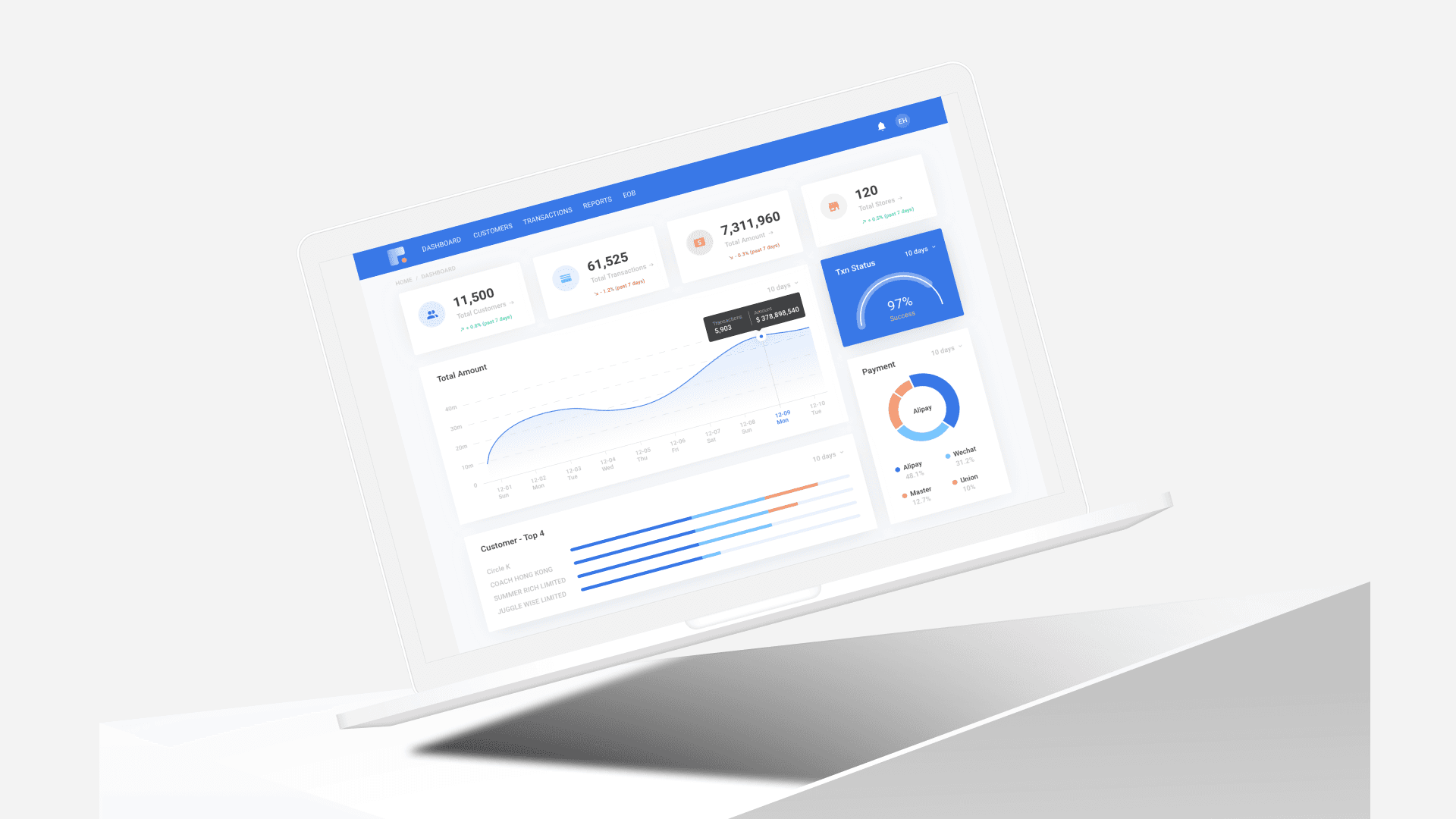
eftPay provides payment solutions for merchants across Asia. As the sole designer in the Taipei branch, I led the design of the company’s internal transaction system from the ground up, defining workflows and building a design library to keep the platform scalable and consistent.
The system enabled teams to navigate complex payment data more efficiently and monitor daily transactions for over 20 payment providers and 22,000 merchants.
Timeline & Company
Nov 2019 - Dec 2020, eftPay
Role
UI Designer
Responsibilities
UXUI Design & User Interviews
Team
2 POs、1 UI、9 Engineers、1 QA
eftPay Internal Transaction Platform
Overview
eftPay provides payment solutions for merchants across Asia. As the sole designer in the Taipei branch, I led the design of the company’s internal transaction system from the ground up, defining workflows and building a design library to keep the platform scalable and consistent.
The system enabled teams to navigate complex payment data more efficiently and monitor daily transactions for over 20 payment providers and 22,000 merchants.
Timeline & Company
Nov 2019 - Dec 2020, eftPay
Role
UI Designer
Responsibilities
UXUI Design & User Interviews
Team
2 POs、1 UI、9 Engineers、1 QA
About Service
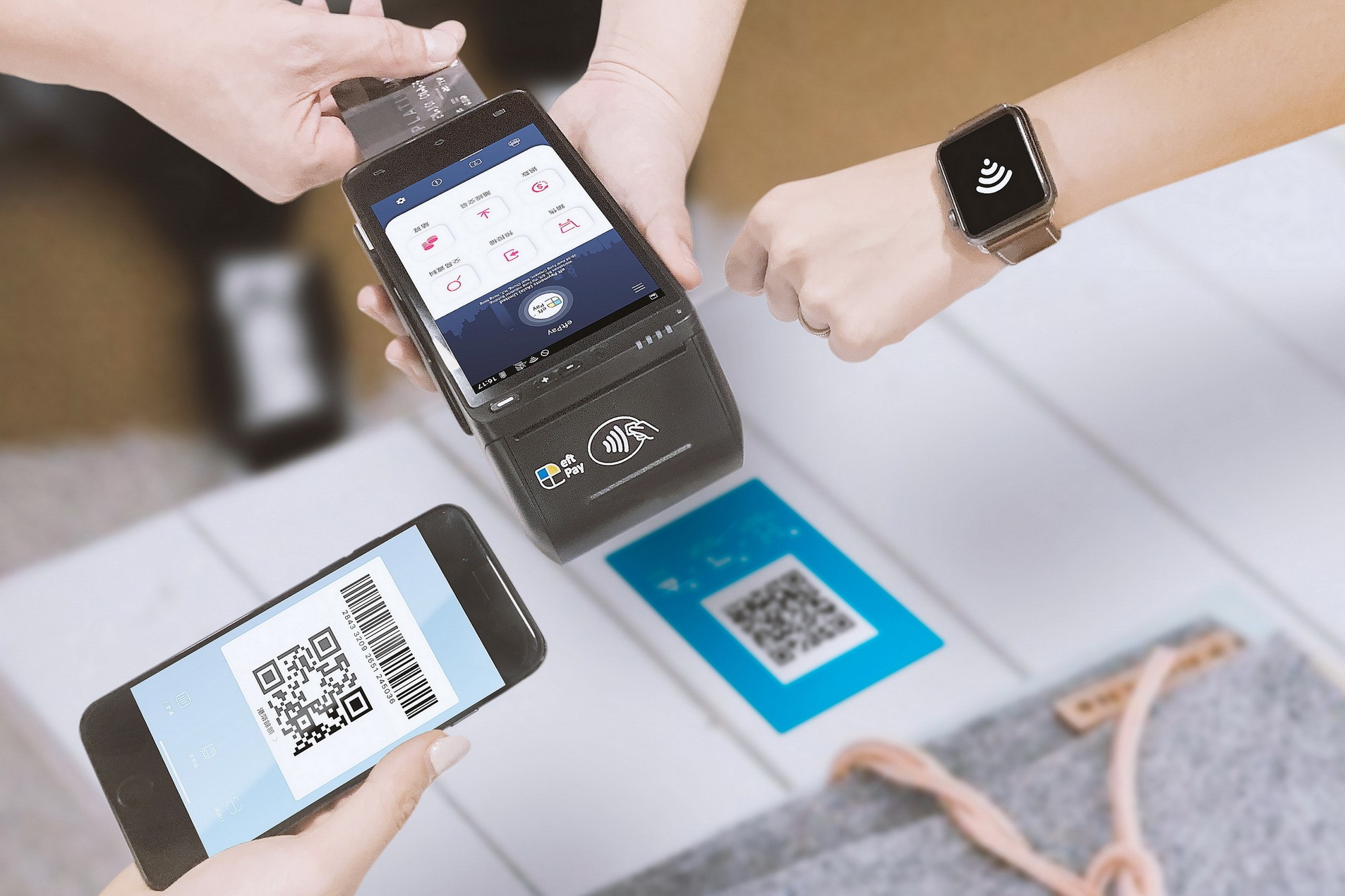
eftPay is Hong Kong's leading electronic wallet service provider, specializing in mobile payments and electronic wallets, and supporting multiple payment methods such as Alipay, WeChat Pay, UnionPay, and American Express. It is suitable for online merchants, individual businesses, and small stores, offering API integration, POS transactions, and electronic invoice services, enabling merchants to easily integrate payment functions.
Challenge
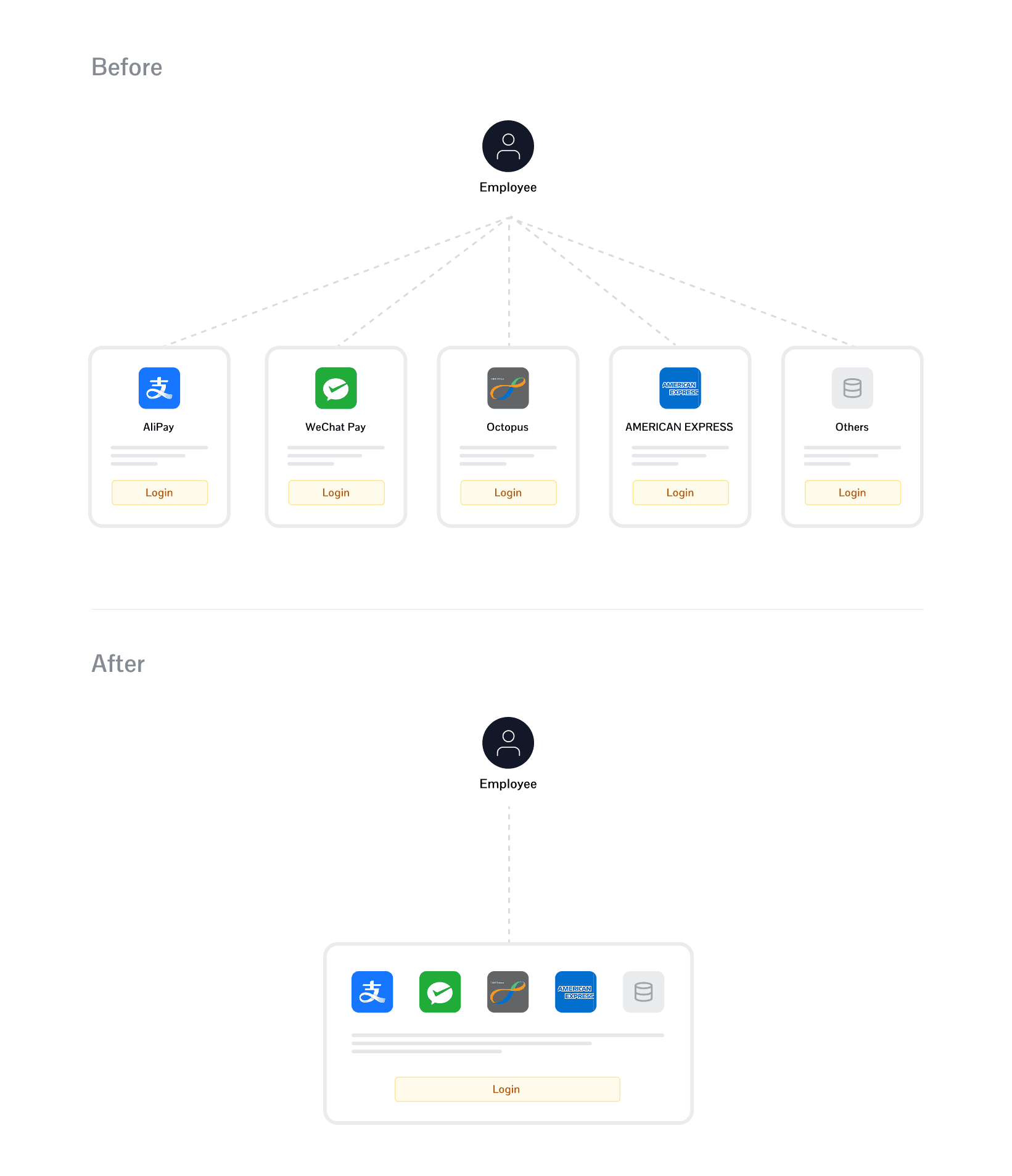
The company had internal tools that allowed employees to view transaction records for each payment provider. However, every provider operated on a separate system, so users had to log into multiple platforms to get a complete overview of all transactions. To address this, the team decided to develop a unified system that consolidated data from all payment providers.
✘ Users had to switch between multiple provider-specific systems to view transactions.
✘ Each system was designed independently, with no shared design guidelines.
✘ Inconsistencies increased cognitive load and slowed down daily workflows.
What I did to make the product work
1
Team Alignment
Worked closely with teams in Hong Kong and Taipei to streamline collaboration and established Figma as the main design and communication tool across offices.
2
Design System
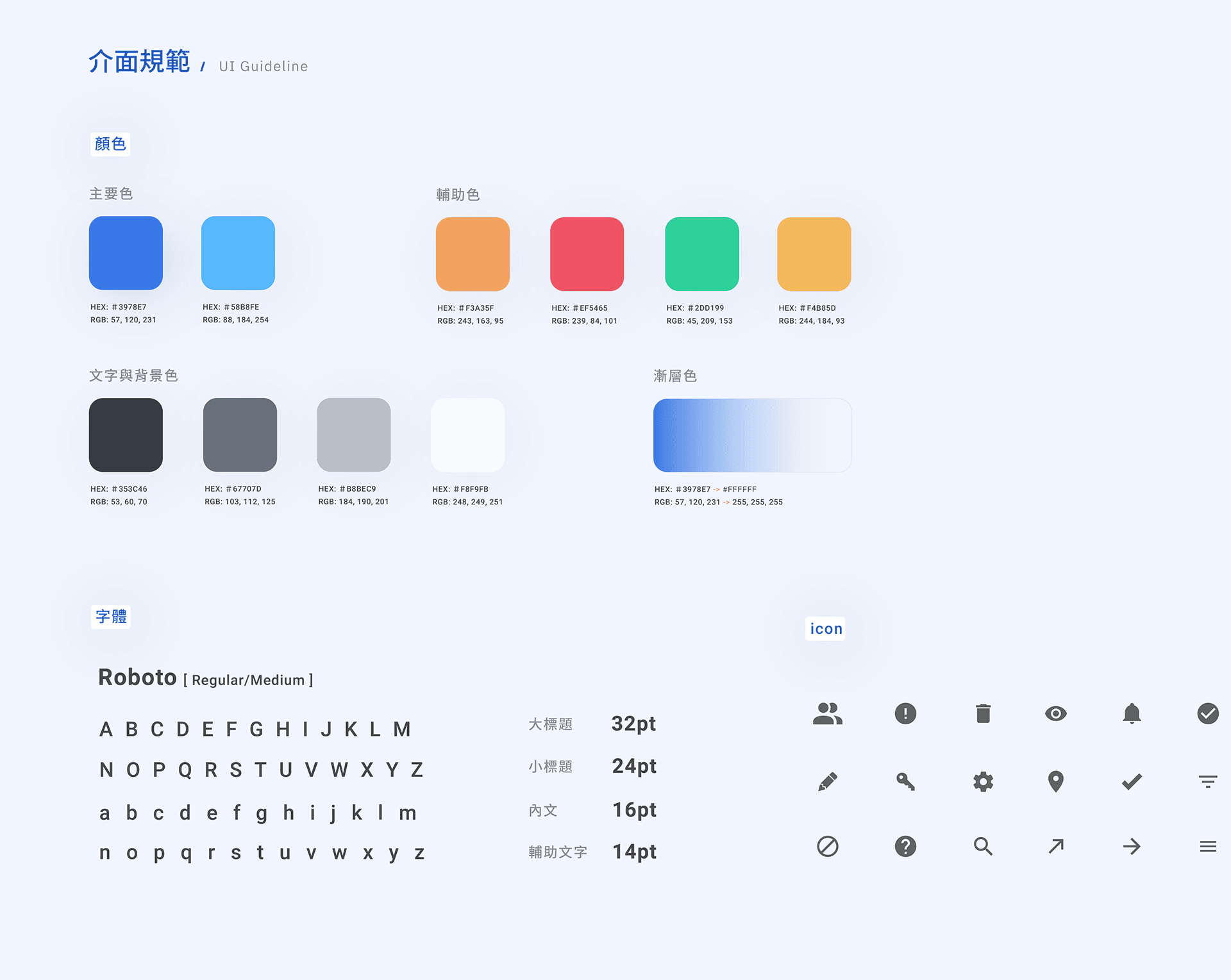
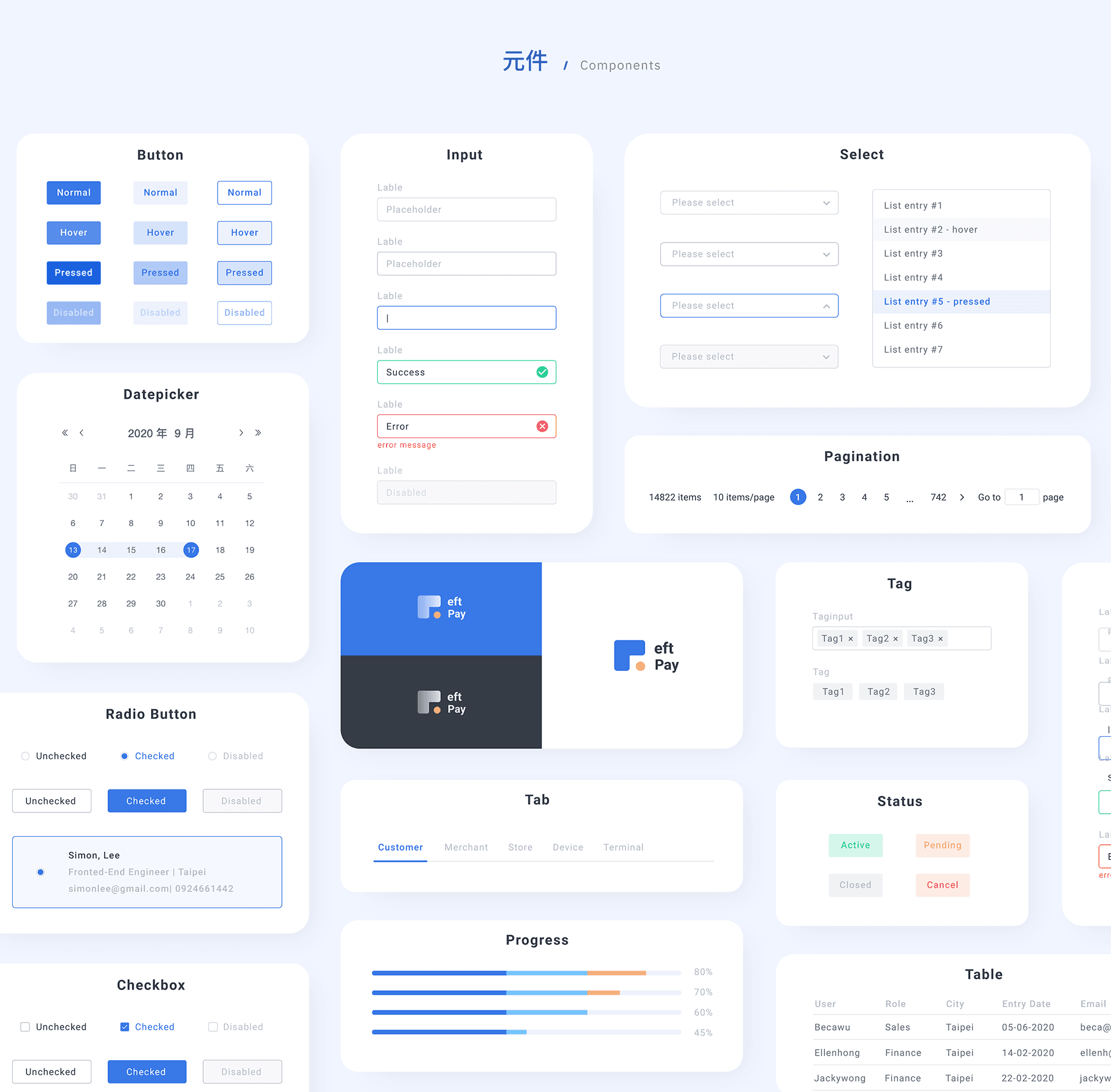
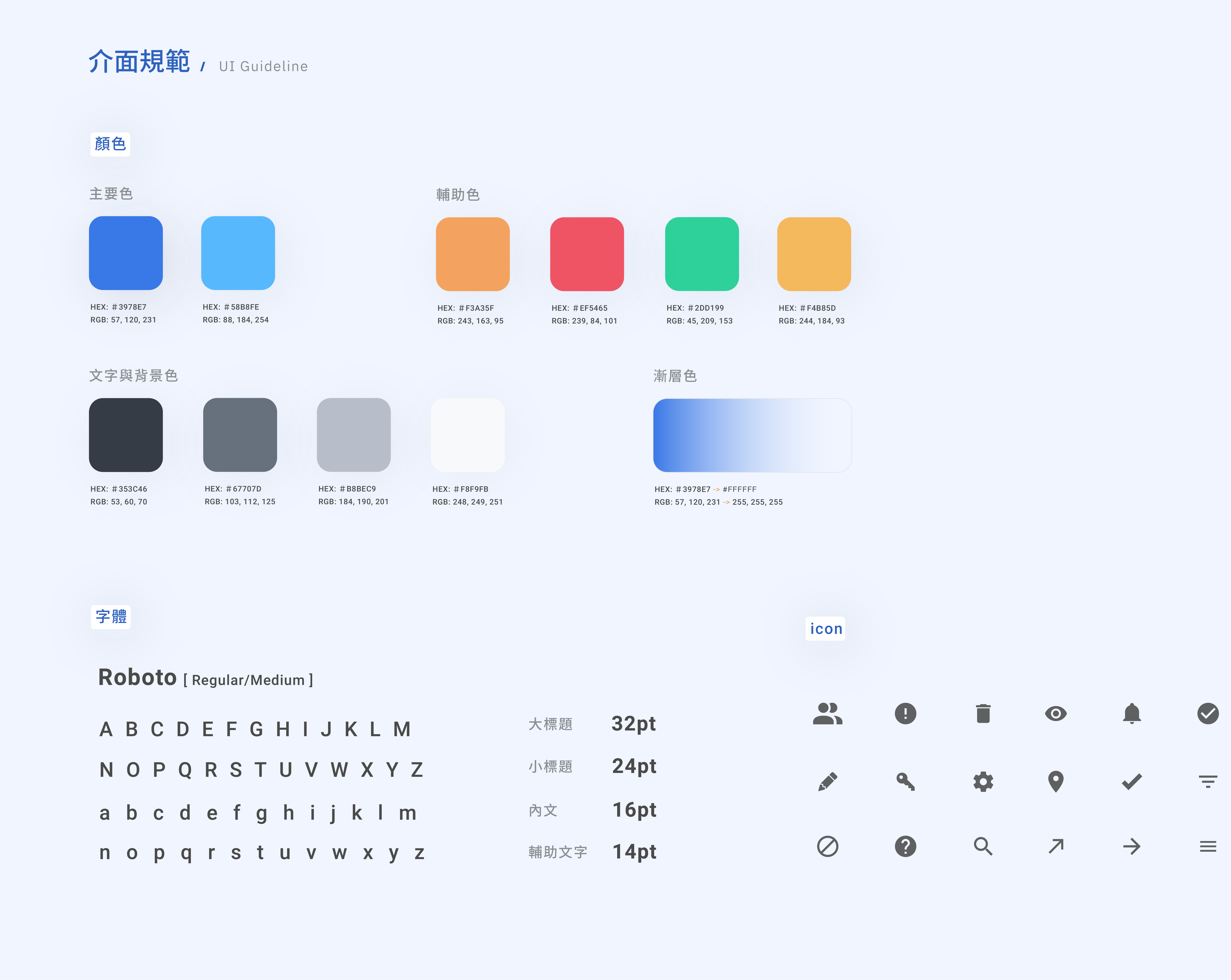
Built a shared design system that unified components, improved handoff quality, and reduced visual inconsistencies in development.
3
Scalable Structure
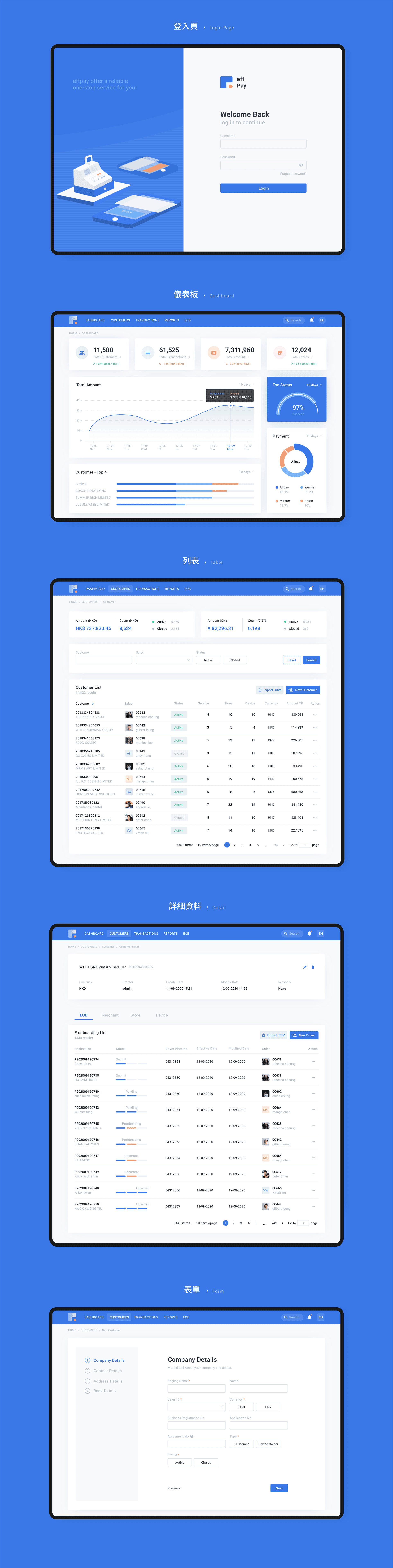
Defined page templates and layout logic that allowed new modules to be added with minimal redesign effort.
4
Complex UI
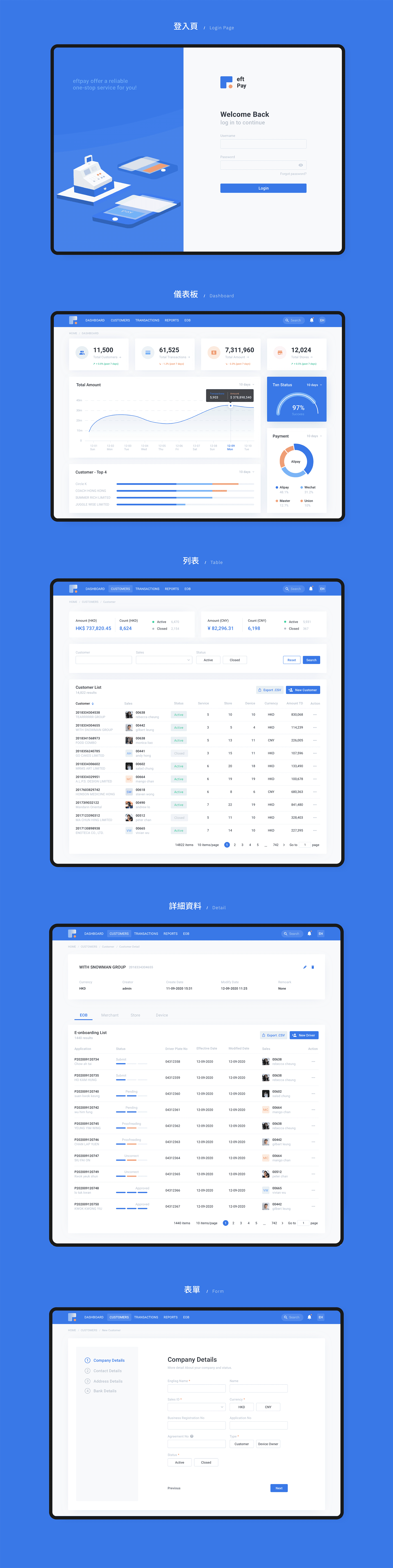
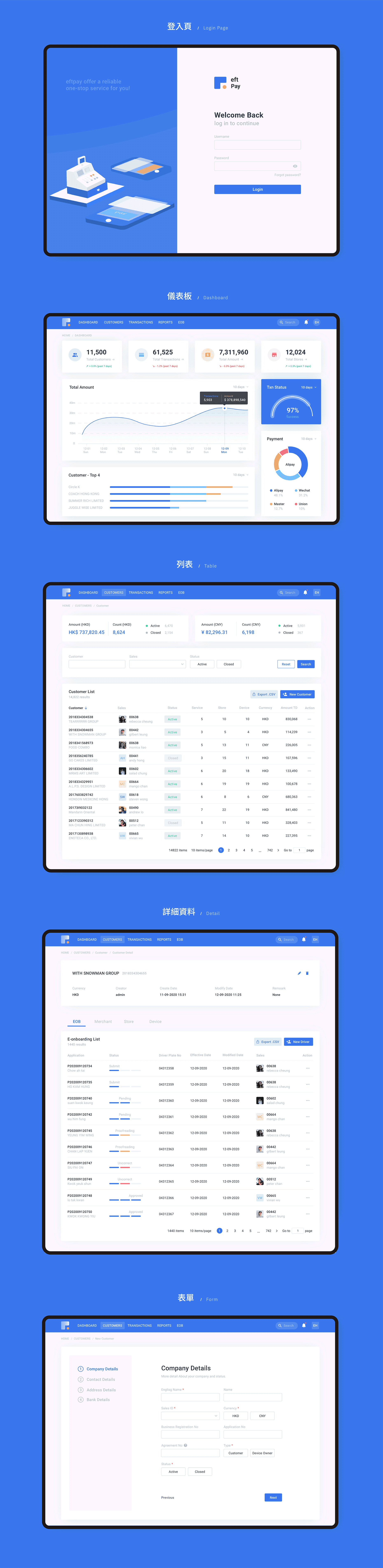
Designed high-density screens for internal transaction workflows, including advanced search, multi-layered queries, list management, and real-time analytics dashboards.
Deliverables
Building a Shared Design Language
Built a cross-team design system with reusable components for forms, tables, and status indicators, improving consistency and speeding up development.
Takeaway
This project was my first time building a design system. I learned how having consistent and flexible components can make development easier for everyone. Back then, I was still a junior designer, but I suggested using Figma for design handoff, and it turned out to really help communication between the Hong Kong and Taipei teams. That experience taught me not to underestimate myself. If an idea can make things better for the team, it’s always worth trying.
Next Project
Fang Hong © 2026
yfhong0973@gmail.com
eftPay Internal
Transaction Platform
Overview
eftPay provides payment solutions for merchants across Asia. As the sole designer in the Taipei branch, I led the design of the company’s internal transaction system from the ground up, defining workflows and building a design library to keep the platform scalable and consistent.
The system enabled teams to navigate complex payment data more efficiently and monitor daily transactions for over 20 payment providers and 22,000 merchants.
Timeline & Company
Nov 2019 - Dec 2020, eftPay
Role
UI Designer
Responsibilities
UXUI Design & User Interviews
Team
2 POs、1 UI、9 Engineers、1 QA
About Service
eftPay is Hong Kong's leading electronic wallet service provider, specializing in mobile payments and electronic wallets, and supporting multiple payment methods such as Alipay, WeChat Pay, UnionPay, and American Express. It is suitable for online merchants, individual businesses, and small stores, offering API integration, POS transactions, and electronic invoice services, enabling merchants to easily integrate payment functions.
Challenge
The company had internal tools that allowed employees to view transaction records for each payment provider. However, every provider operated on a separate system, so users had to log into multiple platforms to get a complete overview of all transactions. To address this, the team decided to develop a unified system that consolidated data from all payment providers.
✘ Users had to switch between multiple provider-specific systems to view transactions.
✘ Each system was designed independently, with no shared design guidelines.
✘ Inconsistencies increased cognitive load and slowed down daily workflows.
What I did to make the product work
1
1
Team Alignment
Worked closely with teams in Hong Kong and Taipei to streamline collaboration and established Figma as the main design and communication tool across offices.
2
2
Design System
Built a shared design system that unified components, improved handoff quality, and reduced visual inconsistencies in development.
3
Scalable Structure
Defined page templates and layout logic that allowed new modules to be added with minimal redesign effort.
4
Complex UI
Designed high-density screens for internal transaction workflows, including advanced search, multi-layered queries, list management, and real-time analytics dashboards.
Deliverables
Building a Shared Design Language
Built a cross-team design system with reusable components for forms, tables, and status indicators, improving consistency and speeding up development.
Takeaway
This project was my first time building a design system. I learned how having consistent and flexible components can make development easier for everyone. Back then, I was still a junior designer, but I suggested using Figma for design handoff, and it turned out to really help communication between the Hong Kong and Taipei teams. That experience taught me not to underestimate myself. If an idea can make things better for the team, it’s always worth trying.
Next Project
Fang Hong © 2026
yfhong0973@gmail.com
About Service
eftPay is Hong Kong's leading electronic wallet service provider, specializing in mobile payments and electronic wallets, and supporting multiple payment methods such as Alipay, WeChat Pay, UnionPay, and American Express. It is suitable for online merchants, individual businesses, and small stores, offering API integration, POS transactions, and electronic invoice services, enabling merchants to easily integrate payment functions.
Challenge
The company had internal tools that allowed employees to view transaction records for each payment provider. However, every provider operated on a separate system, so users had to log into multiple platforms to get a complete overview of all transactions. To address this, the team decided to develop a unified system that consolidated data from all payment providers.
✘ Users had to switch between multiple provider-specific systems to view transactions.
✘ Each system was designed independently, with no shared design guidelines.
✘ Inconsistencies increased cognitive load and slowed down daily workflows.
What I did to make the product work
1
Team Alignment
Worked closely with teams in Hong Kong and Taipei to streamline collaboration and established Figma as the main design and communication tool across offices.
2
Design System
Built a shared design system that unified components, improved handoff quality, and reduced visual inconsistencies in development.
3
Scalable Structure
Defined page templates and layout logic that allowed new modules to be added with minimal redesign effort.
4
Complex UI
Designed high-density screens for internal transaction workflows, including advanced search, multi-layered queries, list management, and real-time analytics dashboards.
Deliverables
Building a Shared Design Language
Built a cross-team design system with reusable components for forms, tables, and status indicators, improving consistency and speeding up development.
Takeaway
This project was my first time building a design system. I learned how having consistent and flexible components can make development easier for everyone.
Back then, I was still a junior designer, but I suggested using Figma for design handoff, and it turned out to really help communication between the Hong Kong and Taipei teams. That experience taught me not to underestimate myself. If an idea can make things better for the team, it’s always worth trying.
Next Project
Fang Hong © 2026
yfhong0973@gmail.com